Our Blog
Questions to Ask at Your First Choledochal Cyst Appointment
August 20, 2026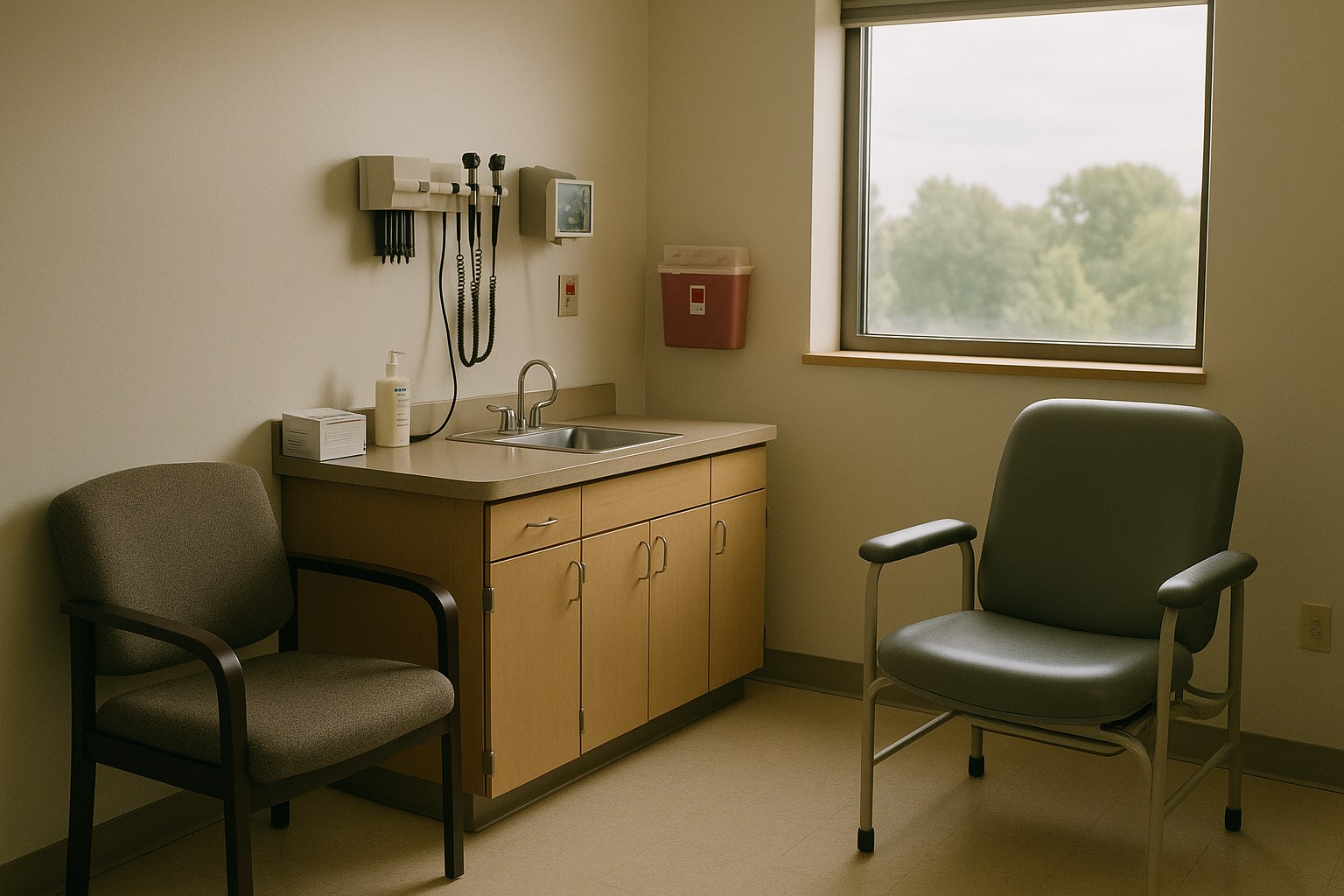
Most families hear the words “choledochal cyst” for the first time in an exam room, usually right after an ultrasound, and usually with very little warning. The appointment that follows is where most of your real questions get answered — and it tends to arrive before you have had time to work out what those questions are.
This is a list you can print and take with you. It is organized the way the conversation usually goes, and it is written for parents of a newly diagnosed child, though adults diagnosed later in life can use most of it unchanged. Nothing here is medical advice, and none of it substitutes for your own care team’s read of your child’s imaging.
Before you go
Three things make the appointment go better. Bring the actual imaging, not just the report — on a disc or through the hospital’s records portal, since outside films often do not transfer automatically. Bring a second person, because you will not remember everything, and one of you should be writing. And write your questions down beforehand, because it is genuinely hard to think of them while someone is drawing a diagram of your child’s bile ducts.
Ask whether the appointment is a consultation or a surgical planning visit. They are different conversations, and knowing which one you are in tells you how much will be decided that day.
Questions about the diagnosis itself
Which type is it? Choledochal cysts are grouped using the Todani classification, which sorts them into five types by where the dilation sits in the biliary tree. According to the StatPearls clinical review, each type carries a distinct natural history and different management considerations, and Types I and IV are the ones seen most often. The type shapes nearly everything that follows, so it is worth getting a clear answer. Our breakdown of the five types may help the answer make more sense afterward.
How confident are you in that classification? Reasonable question, and not a challenge to anyone’s expertise. Ultrasound is usually the first study — the Children’s Hospital of Philadelphia notes that most of these cysts are first found on ultrasound, with CT, MRCP, or ERCP used to define the anatomy further. Asking which additional imaging is planned, and what it would change, tells you how settled the picture is. Our diagnosis page walks through what each study shows.
Is anything else going on? Ask specifically about liver function, signs of inflammation or infection, and whether the pancreas is involved. These findings often drive urgency more than the cyst measurement does.
Questions about surgery
Why complete removal rather than just draining it? This one surprises families, and the answer is worth hearing directly from your surgeon. The same StatPearls review reports that malignancy is roughly four times higher in patients who had drainage without cyst excision compared with those who had complete excision, and puts overall malignancy risk in choledochal cysts at about 5%, rising with age. That risk is the reason removal is the standard approach rather than watchful waiting.
Which reconstruction, and why that one? After the cyst is removed the bile duct has to be rebuilt using a segment of intestine — a procedure Boston Children’s Hospital describes as biliary reconstruction. CHOP lists two reconstructions in use, hepaticoduodenostomy and Roux-en-Y hepaticojejunostomy, and two approaches, open or laparoscopic. Ask which your surgeon plans, why they prefer it for your child’s anatomy, and what would make them change mid-operation. Our treatments overview covers the terminology if you want to read ahead.
What happens if we wait? Not a hostile question. Ask what specifically would need to change for the timeline to move up, and which symptoms should prompt a call rather than waiting for the next appointment. Families who end up waiting months for surgery — which happens — need to know what they are watching for in the meantime.
Questions about the surgeon and the center
This condition is rare enough that experience is unevenly distributed. The StatPearls review reports incidence at roughly 1 in 100,000 to 150,000 live births in Western populations, against about 1 in 1,000 in East Asian populations, with a marked female predominance of about 4 to 1. A diagnosis that rare means the number of these operations a given surgeon has done varies enormously, and it is reasonable to ask.
Useful, askable versions: How many choledochal cyst excisions have you personally performed? How many does this center do in a year? Who operates if you are unavailable? Is there a pediatric hepatobiliary program here, or would a referral make sense? Surgeons who do a lot of these are generally comfortable with the question. Our find a doctor page is a starting point if you are weighing a referral.
Questions about afterward
What does follow-up look like, and for how long? This is the question families most often wish they had asked sooner. CHOP advises continued yearly follow-up with a gastroenterologist or pediatric surgeon, with periodic blood work and imaging, and notes that the elevated bile duct cancer risk persists even after the cyst is removed, along with the possibility of the reconstructed duct narrowing over time. Surveillance is not a sign that something went wrong — it is the expected plan.
Who owns that follow-up as my child grows? Transition from pediatric to adult care is a real gap for rare conditions. Ask now who holds the surveillance schedule at ten years old, and at twenty.
What is recovery actually like? Ask about expected hospital stay, feeding, activity restrictions, and what a normal versus concerning recovery looks like week by week. Our post-operation page and the pre-surgery guide cover what other families experienced.
What you do not have to decide that day
You are allowed to leave without agreeing to anything. Ask for the operative report language, the imaging on a disc, and the classification in writing, then take a week. Second opinions are routine for rare conditions and good surgeons expect them.
It is also worth asking the least clinical question on this list: has anyone here treated a family who would be willing to talk to us? Talking to a parent who is two years past this is worth something no consultation can provide. If your center cannot connect you, our community page exists for exactly that reason.
A note on what this list is
These are questions, not answers. Outcomes and timelines vary considerably from patient to patient, and the specifics of your child’s anatomy, liver function, and symptoms belong to the people who have examined them. This article is educational and is not a substitute for your care team’s judgment — take it with you, and let them fill it in.